
Intelligent Wearable Device for Visually Impaired Individuals
Senior Computer Engineering Capstone

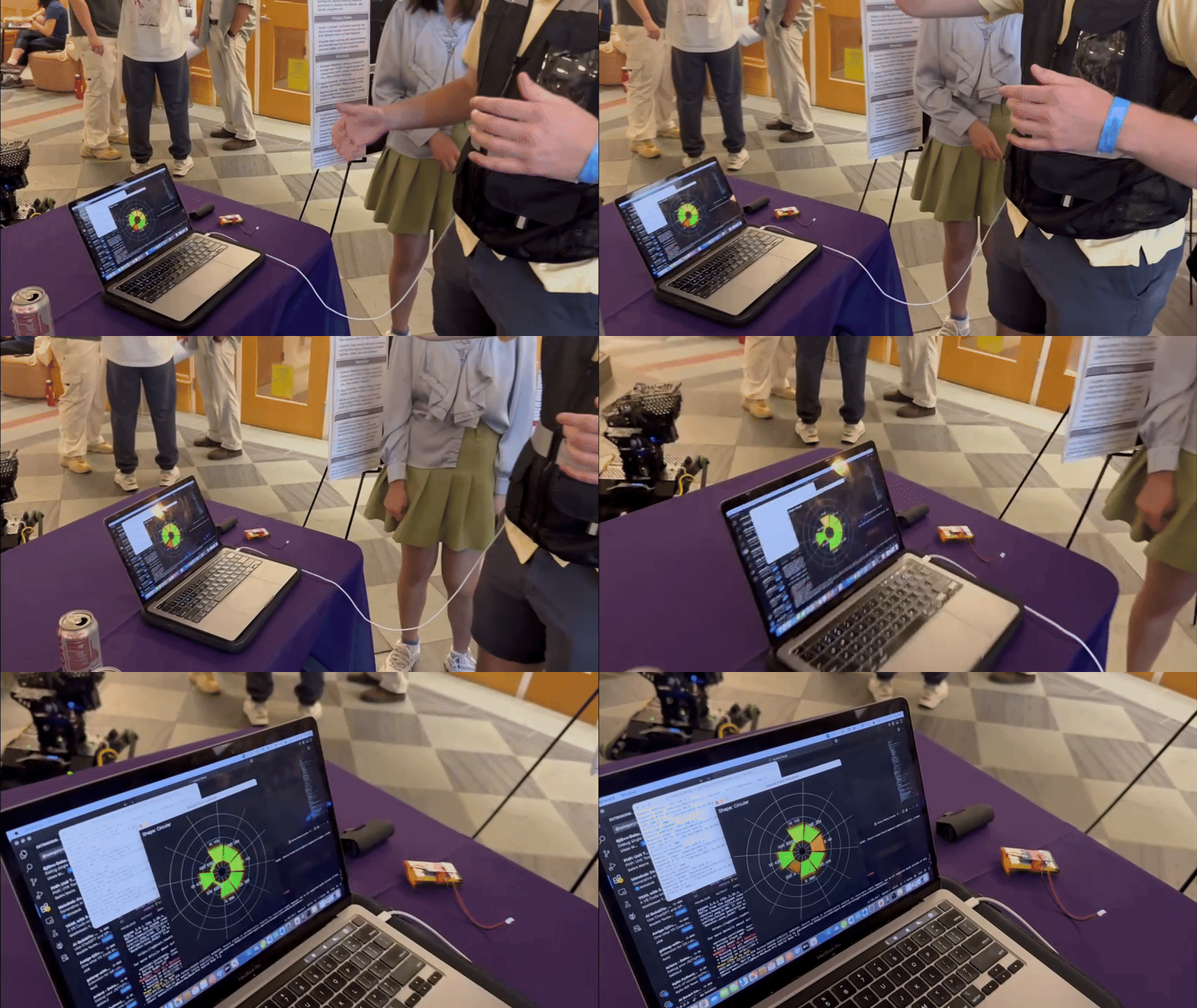

For my senior capstone project (see full report here), I set out to design an intelligent wearable device designed to improve spatial awareness and independence for visually impaired individuals. Too often, existing solutions are bulky, intrusive, or unintuitive, making them impractical for everyday use. I wanted to create something that was not only technically challenging but also genuinely meaningful—an unobtrusive, affordable wearable that could enhance confidence and mobility in daily life.
The result was an intelligent vest equipped with eight depth sensors providing 360° environmental awareness and paired with haptic motors that translated distance data into directional vibrations. As the wearer approached an obstacle, the vest provided immediate tactile feedback, giving them an intuitive sense of their surroundings without relying on vision.
My primary focus on the team was hardware integration and system programming. I led the assembly of the wearable vest, wiring and embedding the sensors and haptic motors, and programming the microcontroller that managed real-time sensor input and haptic feedback output. I also developed a Python-based visualization tool that allowed us to demo the system in action, showing how the sensors detected obstacles and how that translated to feedback for the user. Throughout the project, I worked to balance technical complexity with the practical needs of our users, ensuring the system was lightweight, durable, and easy to wear.
Since this project was created with the intention of addressing a real-world need, we were guided by feedback from members of the St. Louis Society for the Blind and Visually Impaired. Their input emphasized reliability, comfort, and an intuitive design, shaping the final prototype and validating our approach. By combining user-centered design with advanced engineering techniques, we created a device that demonstrated both technical innovation and tangible potential to improve everyday life.
If you wish to learn more about this project, you can read the full project report, visit the project website, or explore how I expanded on it with the WashU Robotics Club.